
How I Validated Finnear: From 15 Email Signups to Building in Public
When you're bootstrapping a startup, every hour of development time is precious. You can't afford to spend months building something nobody wants. So before I wrote a single line of code for Finnear, I needed to know if anyone would actually use it.
The Validation Experiment
I kept it simple. I created a landing page with a waitlist signup form and started sharing it everywhere I could think of. My main channels were Threads, X (Twitter), and Reddit, places where founders and bootstrappers hang out.
I posted screenshots of mockups, talked about the problem I was solving, and dropped the waitlist link. No paid ads, no fancy marketing campaigns. Just authentic posts about what I was building and why it mattered.
Within a few days, I had about 15 email signups.
That might not sound like much, but for a pre-launch product with zero following? It was enough signal. These were people who didn't know me, had never used the product, and were still willing to give me their email address. That told me something.
So I started building.
What Is Finnear?
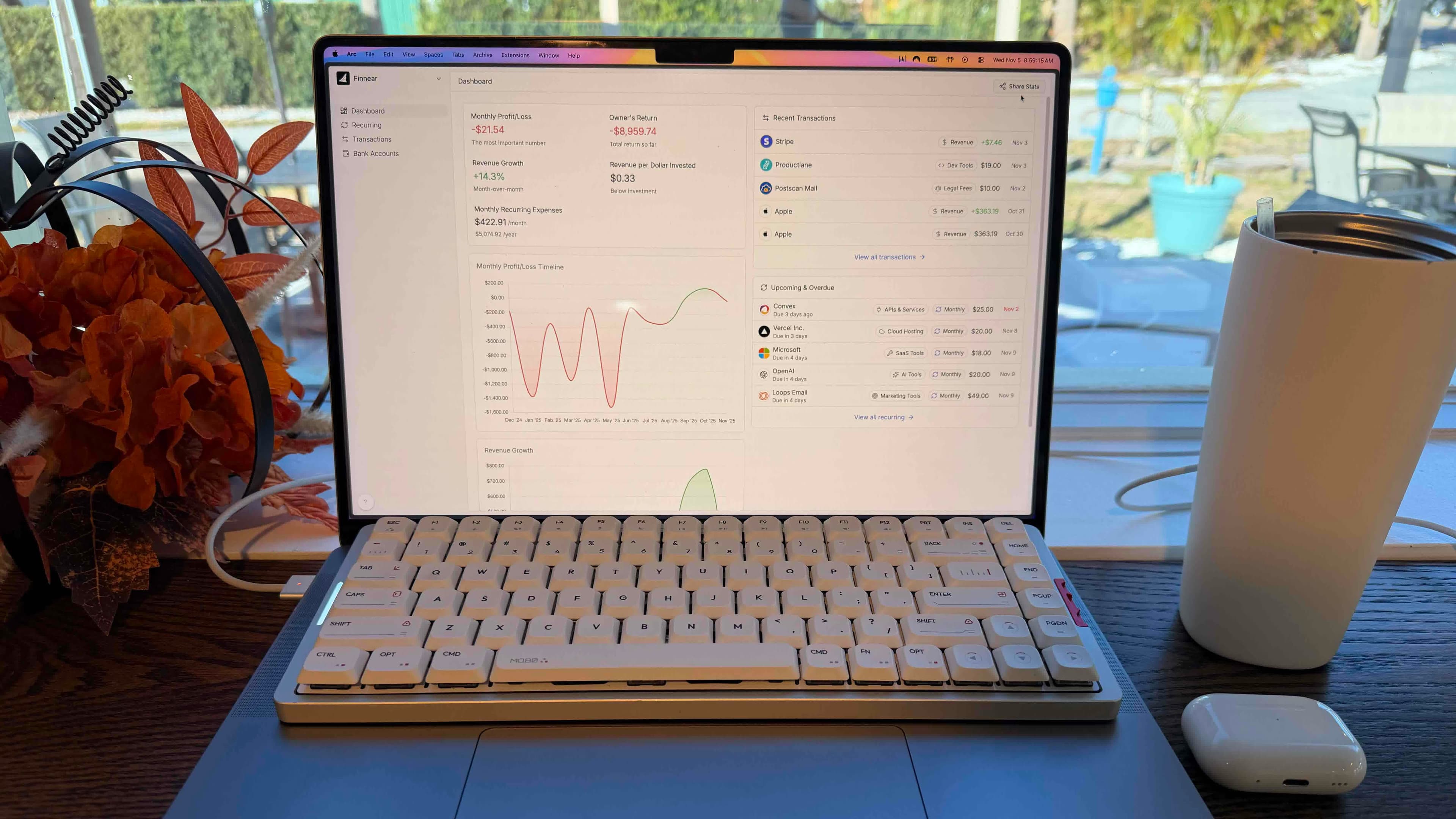
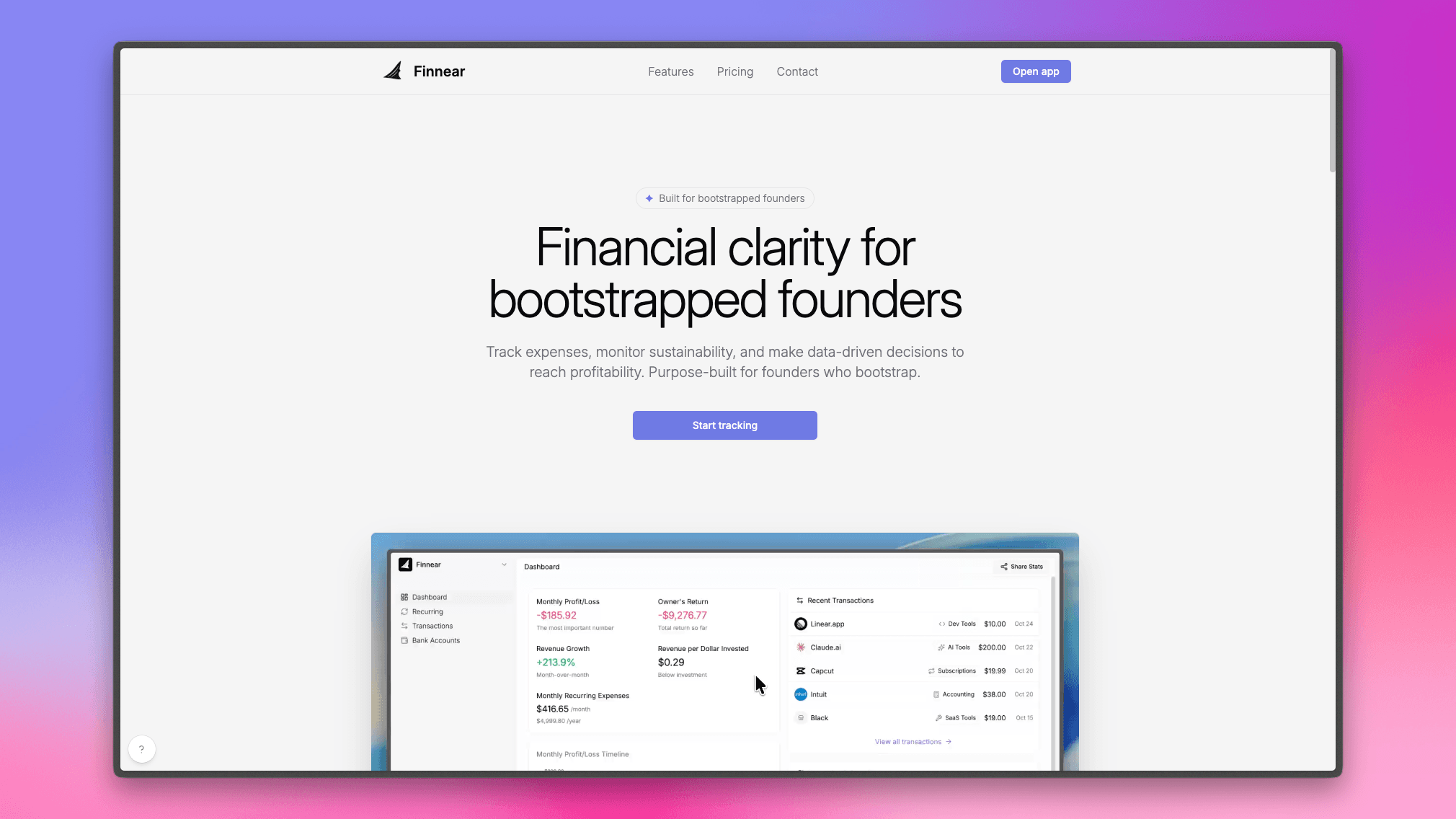
Finnear is a financial tracking app built specifically for bootstrapped startup founders. Not the VC backed, burn rate obsessed founders. The ones who are funding their businesses themselves and care more about sustainability than hockey stick growth.
If you're a solo founder or small team maintaining a dedicated business bank account, Finnear helps you track the metrics that actually matter. Whether you're profitable yet. When you'll break even. How much of your own money you've put into the business. Your monthly sustainability gap.
Instead of focusing on runway (how long until you run out of VC money), Finnear tracks things like total capital invested, average monthly spending versus revenue, and months to profitability. It's built for founders who are playing the long game, not the fundraising game.
The Name: Finnear
The name came from two places. First, "Finn" for financial. Second, I wanted something that felt close to Linear, the project management tool I use and love.
Why Linear? Because I'm not just inspired by their product philosophy, I'm targeting their users.
If you use Linear to manage your startup's projects, there's a good chance you care about clean UI, thoughtful UX, and tools that get out of your way. Those are exactly the kinds of founders I'm building Finnear for. People who appreciate good design and want their financial dashboard to feel as polished as their task board.
I'm deliberately making Finnear's UI look and feel similar to Linear. Not copying it, but making it familiar. If you love Linear's aesthetic, you should feel right at home in Finnear. The spacing, the typography, the subtle animations, the dark mode that actually looks good. It's all designed to feel like it belongs in the same family of tools.
The Plaid Limitation: US and Canada Only (For Now)
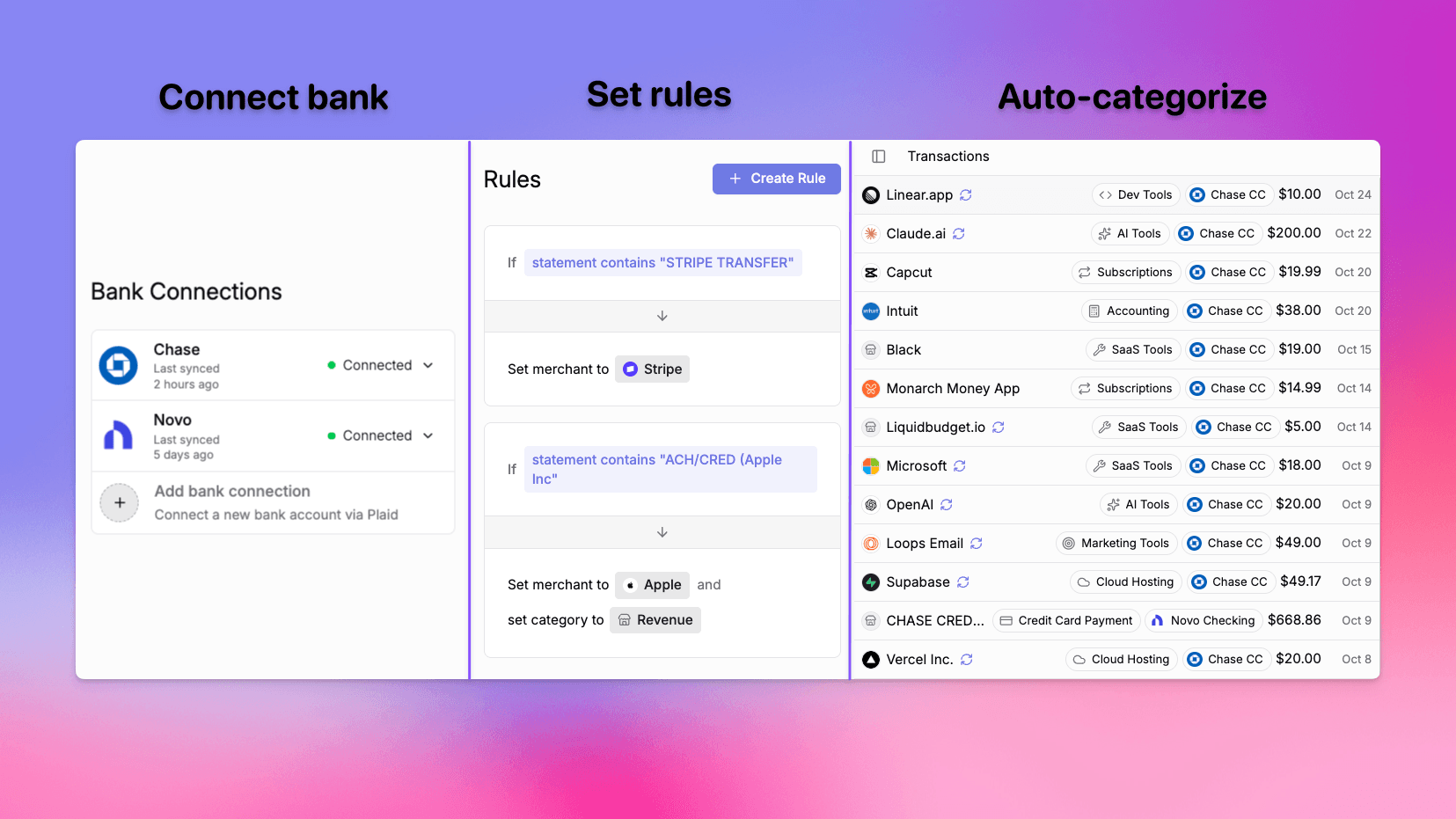
One of the biggest constraints I'm working with is Plaid. It's how Finnear connects to your bank account to pull transactions and balances automatically. The problem? Plaid primarily works in the US and Canada.
That means, at least initially, Finnear is limited to those markets. It's not ideal. There are bootstrapped founders all over the world who could use this. But it's the reality of building with the tools available. Maybe in the future I'll explore alternatives for other regions, but for now, I'm focusing on where I can deliver the best experience.
What's Next: The Real Validation
Here's the thing about those 15 email signups. They were encouraging, but they weren't the full picture. People signing up for a waitlist is one thing. People actually using the product is something else entirely. People paying for it is the real validation.
As of writing this, I have zero users and zero paying customers.
That's why the next phase is critical. I'm going all-in on marketing. Not to build hype or chase vanity metrics, but to get Finnear in front of the right people and see if they'll actually pay $10/month for it.
I need to validate this one more time. If I can get some paying users, people who find enough value in Finnear to pull out their credit cards, then I know I'm onto something. If I can't, then it's time to move on to the next project.
That might sound harsh, but it's the bootstrap reality. You can't keep pouring time and energy into something that isn't working. You have to be willing to call it and try something else.
Building in Public, One Step at a Time
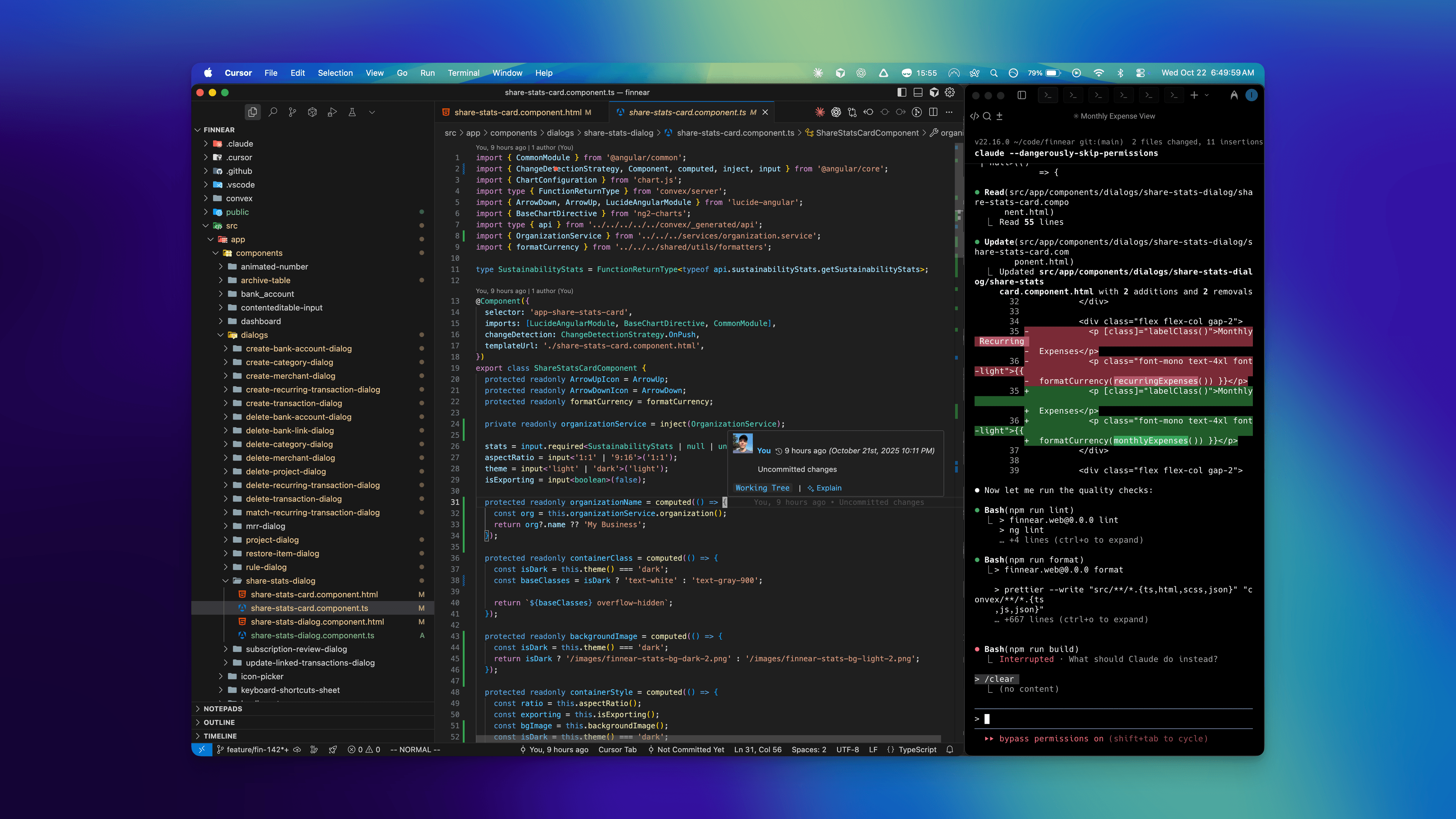
I've been sharing the journey on Threads (where I've built up about 800 followers) by posting regular screenshots and videos of what I'm building. It keeps me accountable, and it's already generated those initial waitlist signups.
But now it's time to ship. The sustainability dashboard is done. Average monthly spending and revenue, total capital invested, break even calculations, months to profitability. All the core features that make Finnear different from generic accounting software.
I'm about to find out if people will pay for Finnear.
If you're a bootstrapped founder who's tired of financial tools built for the VC crowd, I'd love for you to try it. Sign up at finnear.app.
And if you're building your own thing, remember: validation isn't just about signups. It's about whether people will actually pay you. Everything else is just noise.