
Building Finnear: My Journey with Angular and Convex
Hey there! I wanted to share what I've been working on lately and the tech stack I'm using to bring Finnear to life.
What I'm Building
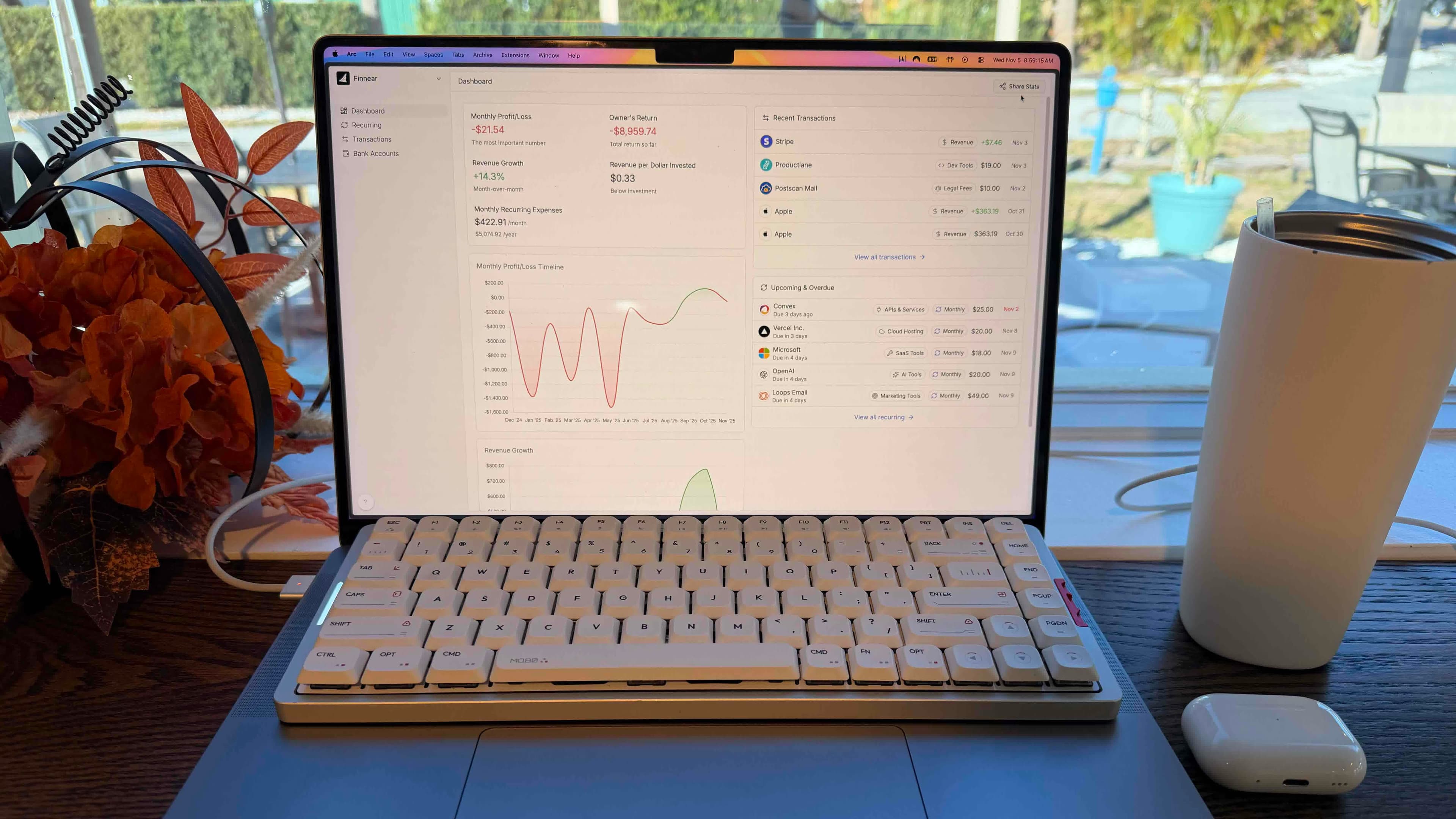
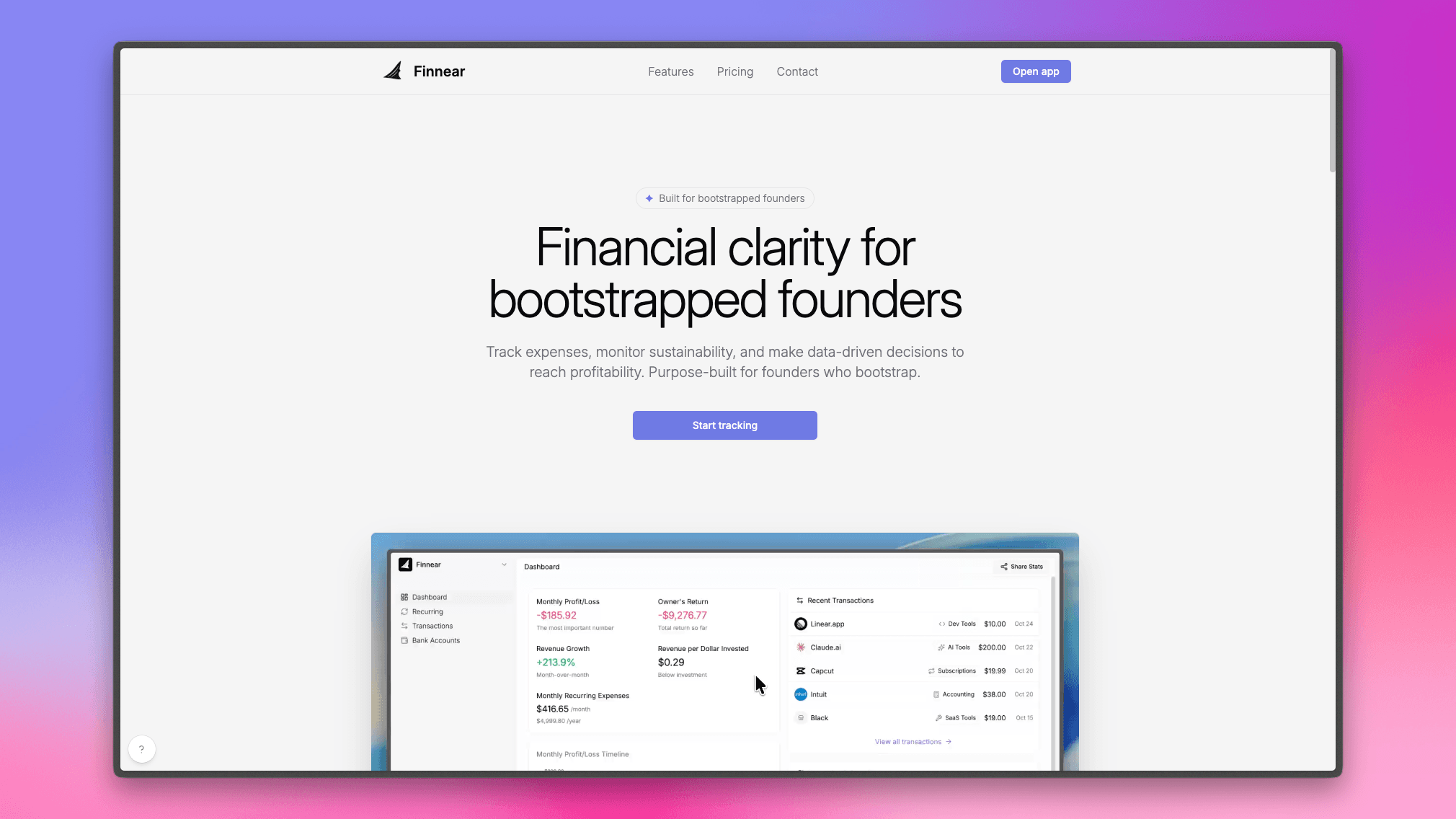
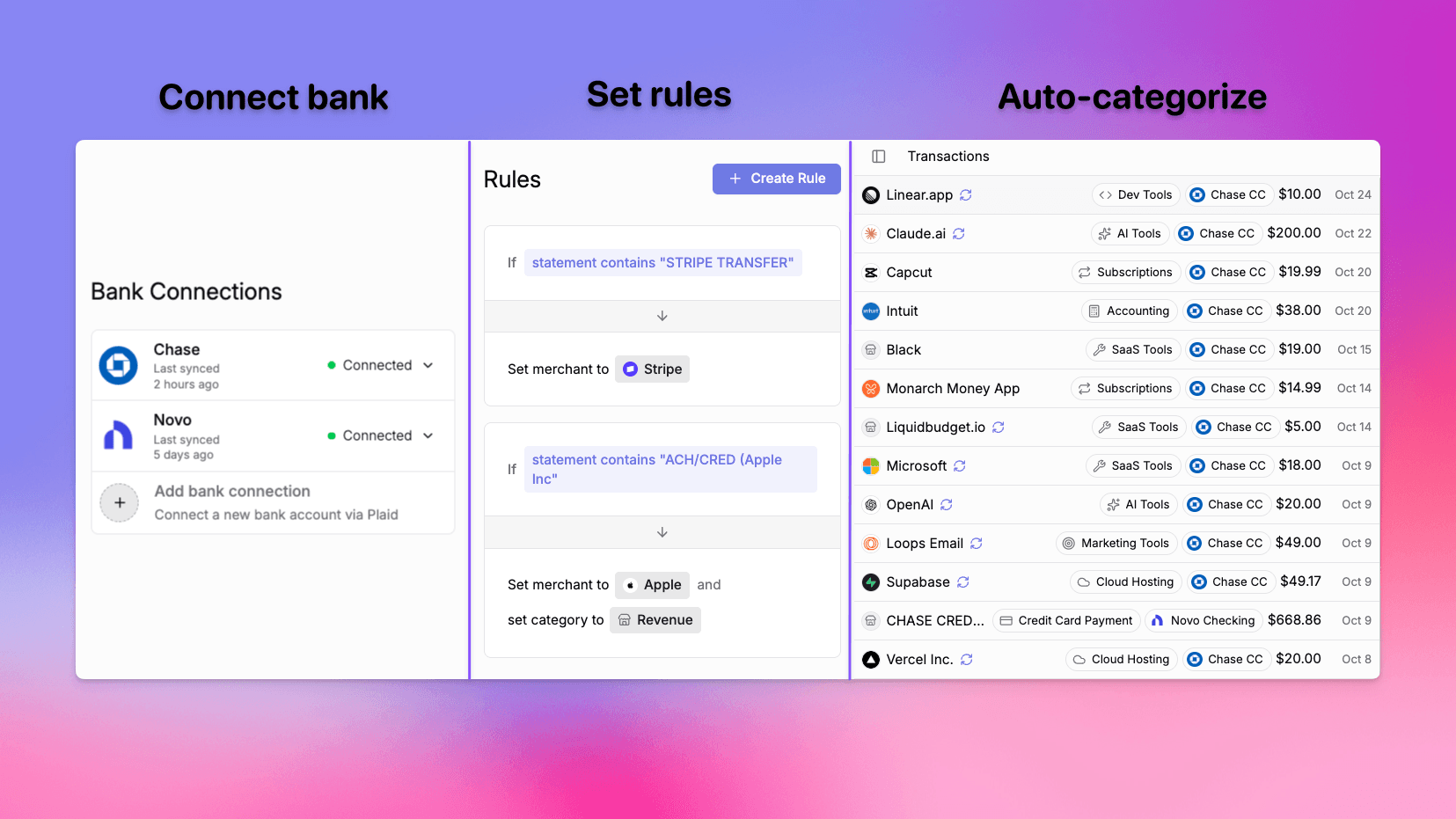
Finnear is an app for SaaS founders to see their finance metrics. Things like recurring expenses, recurring revenue, and total invested from personal bank accounts. For the past 10 years I’ve used Angular to build my personal projects. Started with Angular.js for a bit right before Google cut it for Angular2+, and that’s been my go-to framework since. For about 8 years of my coding journey I was a Node+Express guy, building endpoints to query data with mongodb. This is until I tried Supabase a couple years ago. It was game changing. For Finnear, I decided to give Convex a try.
The Tech Stack
For Finnear, I've landed on a combination that feels really solid:
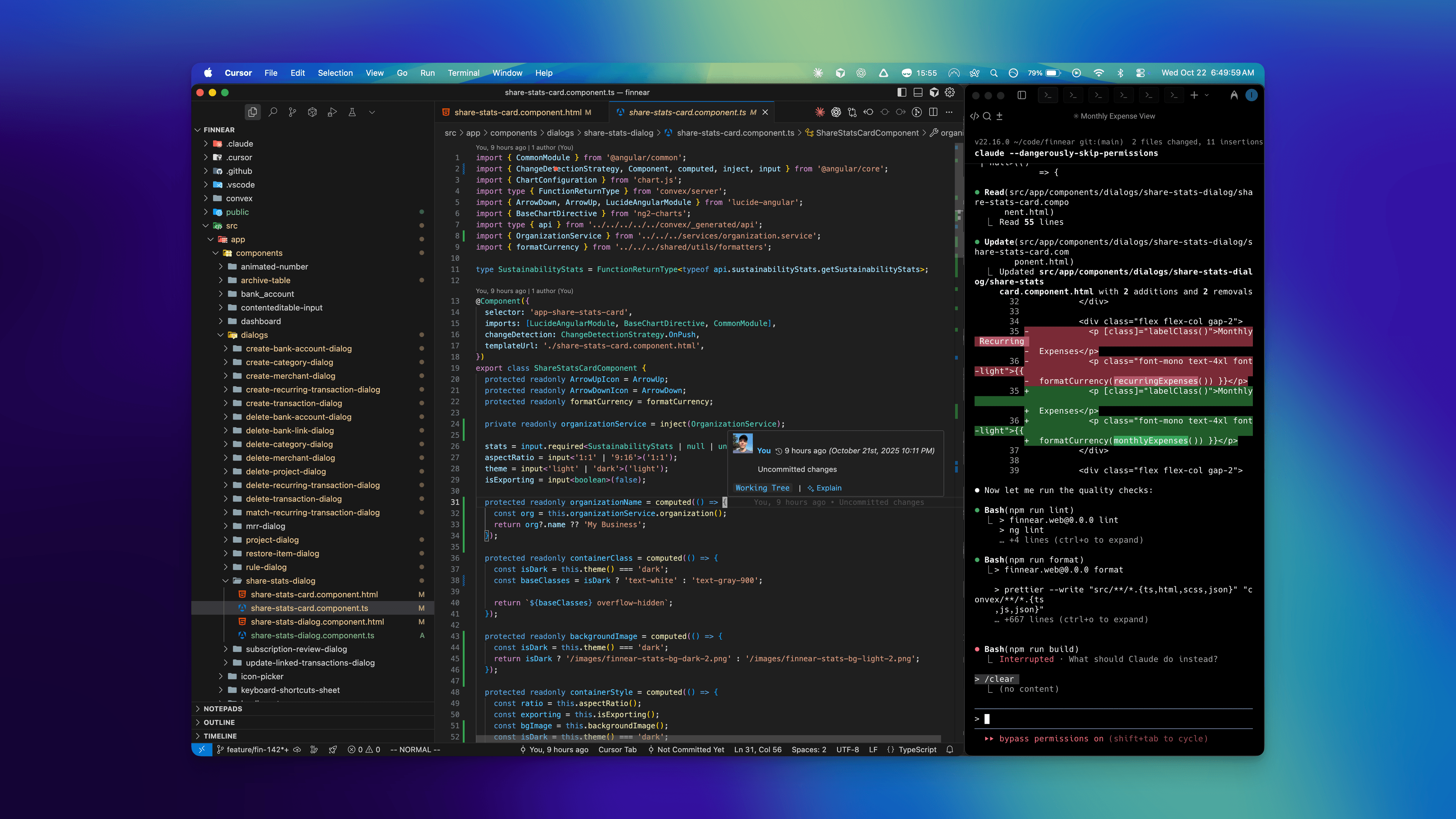
Frontend: Angular I went with Angular for the web interface. Yeah, I know some people have strong opinions about Angular. To me, the structure it provides is pretty refreshing. The TypeScript-first approach, the powerful CLI, the built-in dependency injection... it all just clicks for this project. Plus, when you're building something from scratch, having those opinions baked in can actually speed things up rather than slow you down.
Backend: Convex Now this is where things get interesting. I'm using Convex for the backend, and honestly, it's been a game-changer. If you haven't checked out Convex yet, it's worth a look. It's a backend platform that handles your database, server functions, and real-time subscriptions all in one place. Its very similar to Supabase except its not a Postgres db under the hood. Its something completely custom. And you write your table schema with Typescript. The developer experience is incredibly smooth – you write TypeScript functions, and Convex handles the rest. No more wrestling with ORMs or setting up WebSocket infrastructure from scratch.
Why This Combo Works
Honestly, the skeleton for this blog was written by AI including this headline, so I’ve been trying to come up with why this combo works. The truth is when you’re starting out on a new project, the best thing to do is use tools you’re familiar with. I’m insanely familiar with Angular. I can write it in my sleep. This meant I can leverage AI tools like Claude Code and scan what it built without having to take the time to understand it. It came naturally. I tried to “vibe code” a React app that I have no experience with and it was difficult because I had no idea if the AI was using best practices.
This is my first project using Convex, so I did break my rule here. However, I heard great things about Convex, and although the first week took was mostly eaten up by understanding the flow of Convex, it has since saved me way more time than Supabase.
The Development Experience
Angular has a nice developer experience. Hot reload is clutch, but every framework has that at this point.
Convex, on the other hand, has amazing DevX. For one, you don’t run the server locally (you can if you want). Every convex project gets a dev server and a prod server automatically. When you make changes to your code, the convex cli listens to your changes and instantly updates the dev server with those changes. This is great because your frontend is always hitting a live server even during development so you never run into a problem where something works on local but not dev or prod. You also feel the slight latency when hitting the dev server. This helps me understand where I should add loading states. When server is running locally, api requests are instant so it’s hard to gauge what the experience will be like on prod.
Convex instantly updates the Types for the backend functions and data models. When I change a property name in convex, Angular instantly fails during compilation. This helps both the developer and the AI agent understand frontend also needs to change.
What's Next
I'm still early in the journey with Finnear, but I'm really happy with the foundation I've built. The stack feels modern without being bleeding-edge unstable, and I can move fast without feeling like I'm writing hacky code.
If you're considering a similar stack, I'd say go for it. The learning curve for Convex is pretty gentle. If you're already comfortable with Angular, go with it. It’s not as popular as React, but you’ll get everything you need out of it without having to learn a new framework.
I'll keep sharing updates as Finnear develops. Building in public is new for me, but it's been fun so far.